
Opening Hook
It was a scorching July afternoon in Dubai when Ahmed noticed something strange: his fridge wasn’t keeping his water bottles cold anymore. The freezer, once full of rock-hard ice cubes, was now dripping with melted water. In desperation, he called a technician, who quickly explained the issue—the fridge had lost its cooling gas. Within an hour, a gas refill restored the cold air, and Ahmed’s family could breathe easy again.
Stories like Ahmed’s are incredibly common across the UAE, where high temperatures put household refrigerators under enormous pressure. But why exactly is fridge gas refill such a frequent service in this region? Let’s explore the reasons in detail.
The Role of Cooling Gas in a Fridge
To understand why gas refill is common, you first need to know what this gas actually does. In simple terms, refrigerators use a special chemical—often called refrigerant gas—that circulates through coils and absorbs heat from inside the fridge. This process is what keeps your milk fresh, your vegetables crisp, and your water bottles icy cold.
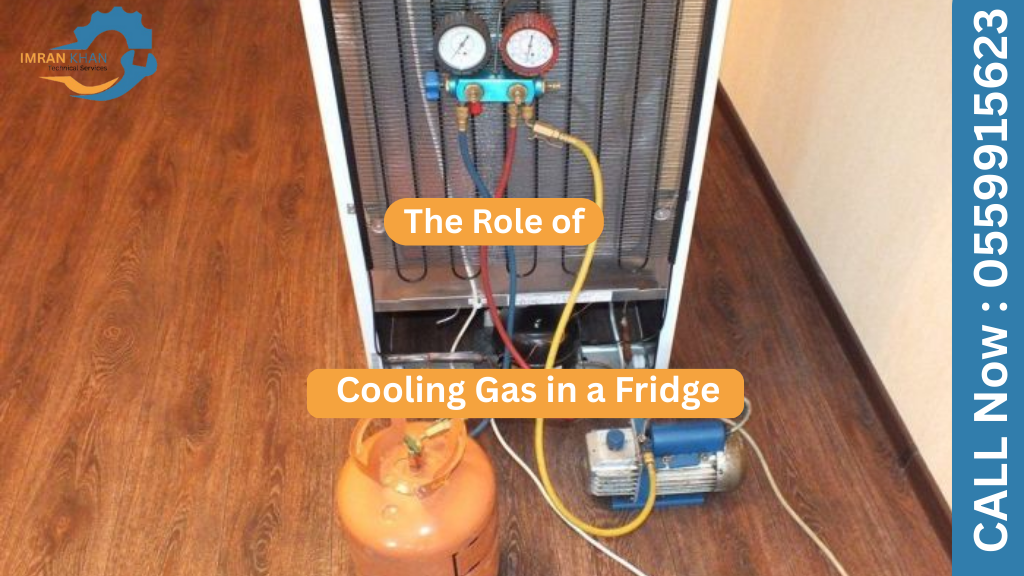
Without enough refrigerant, the cooling cycle gets disrupted. The fridge may still run, but it won’t produce the chilly environment we rely on daily. Think of it as trying to drive a car with almost no fuel in the tank—it sputters but doesn’t go anywhere.
The UAE’s Extreme Climate Takes a Toll
Furthermore, the UAE’s weather plays a massive role in why gas refills are so common. In summer, outdoor temperatures can easily cross 45°C, and even with air conditioning, indoor spaces stay warmer than in most parts of the world. This means refrigerators have to work overtime to maintain the right internal temperature.
As a result, the increased workload puts strain on the cooling system. Over time, tiny leaks in the gas lines or seals may develop, causing the refrigerant to escape. Once enough gas leaks out, the fridge loses its ability to cool effectively.
For instance, in Sharjah, a family reported that their three-year-old fridge required a gas refill every summer due to the heavy strain from constant use. Their technician explained that while the fridge was functioning fine mechanically, the climate pushed it to its limits.
The Impact of Frequent Door Opening
In contrast to colder countries where refrigerators don’t need to fight extreme heat, UAE households tend to open fridge doors more often—especially during summer. Guests coming over, children grabbing drinks, or families storing large quantities of food and water all contribute to the issue.
Every time the door opens, warm air rushes in, forcing the fridge to work harder. Over time, this puts pressure on the cooling cycle and increases the likelihood of gas leakage.
Poor Maintenance Practices
Another reason fridge gas refill is so common in the UAE is simple: lack of regular maintenance. Many residents wait until the fridge completely stops cooling before calling a technician. By then, the problem has often grown worse.
For example, cleaning condenser coils or checking seals regularly can reduce the strain on the cooling system. But when these tasks are ignored, small leaks go unnoticed, and the refrigerant slowly escapes. By the time a professional inspects the fridge, a full gas refill is required.
The Age of Appliances
In addition, the age of refrigerators in UAE homes plays a role. Expats moving into rental apartments often inherit older appliances, which are more prone to wear and tear. Seals weaken, pipes corrode, and compressors lose efficiency.
As a result, these older machines often need frequent attention, including gas top-ups. A tenant in Dubai Investment Park once shared that their landlord’s 10-year-old fridge required a gas refill twice in a single year—highlighting how aging appliances are a major factor.
Why Gas Leaks Happen Frequently
But why does the gas leak so often in the first place? Several technical reasons contribute:

- Vibrations from compressors can loosen joints over time.
- Humidity in coastal areas like Abu Dhabi or Ajman accelerates corrosion in copper pipes.
- Manufacturing flaws in low-cost appliances make them more vulnerable.
- Overloading fridges puts extra strain on the system, increasing the chance of leaks.
These small leaks are often invisible to the eye. Unlike a burst pipe, refrigerant gas leaks silently and slowly, so residents only notice once food starts spoiling.
The High Dependence on Refrigerators in UAE Homes
Another key reason gas refills are common lies in our reliance on refrigerators. In the UAE, fridges aren’t just for storing fresh produce. They hold everything from bottled water to medicines that must remain at a stable temperature.
For instance, during Ramadan, families stock fridges heavily with food, drinks, and desserts. Any cooling issue during this time can be a nightmare. This heavy dependence means that the moment a fridge falters, calling for a gas refill becomes urgent.
The Cost Factor: Refill vs. Replacement
In contrast to replacing a fridge—which can cost anywhere from AED 1,200 to AED 4,000 depending on the brand—gas refills are relatively affordable. Most technicians charge between AED 150 to AED 400 for a refill, making it a quick, budget-friendly solution for households.
Because of this affordability, many residents prefer refilling the gas rather than investing in a new machine, even if the fridge is already old. This cycle contributes to the frequency of gas refill services in the region.
The Technician’s Perspective
From the point of view of repair technicians, fridge gas refill is one of the most requested services in the UAE. Professionals often carry different types of refrigerant gases (R134a, R600a, R410a, etc.) in their vans to handle calls quickly.
One technician in Deira shared that during peak summer, he receives five to six gas refill requests every single day. This shows not just the commonality of the issue but also the demand for fast solutions.
Preventing Frequent Gas Refills
So, what can homeowners do to reduce the need for frequent refills? While some leaks are inevitable, a few simple practices can help:
- Regular maintenance: Clean coils, check seals, and service compressors yearly.
- Avoid overloading: Leave enough space inside for proper air circulation.
- Proper installation: Ensure fridges are installed away from heat sources like ovens.
- Professional inspection: Call technicians at the first sign of reduced cooling instead of waiting.
By following these steps, families can prolong their fridge’s efficiency and reduce how often gas refills are needed.
Frequently Asked Questions (FAQs)
1. Why does my fridge need a gas refill so often in the UAE?
Fridge gas refills are common due to the UAE’s extreme heat, frequent door openings, aging appliances, poor maintenance, and occasional small leaks in the refrigerant system. High usage and heavy cooling demands accelerate gas loss.
2. What does the cooling gas in a fridge do?
The refrigerant gas circulates through coils, absorbing heat from inside the fridge and releasing it outside. This process keeps food, drinks, and other perishables cold. Without sufficient gas, the fridge runs but cannot cool effectively.
3. How can I prevent frequent fridge gas refills?
Preventive measures include regular maintenance (cleaning coils, checking seals, servicing compressors), avoiding overloading the fridge, proper installation away from heat sources, and calling a professional at the first sign of reduced cooling.
4. Can old or poorly maintained fridges cause more frequent gas leaks?
Yes. Older appliances have worn seals, corroded pipes, and less efficient compressors, making them more prone to leaks. Similarly, neglected maintenance allows small leaks to go unnoticed until a full refill is required.
5. Is it cheaper to refill gas or replace the fridge?
Refilling gas is significantly cheaper (AED 150–400) compared to buying a new fridge (AED 1,200–4,000). This affordability makes gas refills a common and quick solution, especially for functioning but aging appliances.
Closing Thoughts
Ahmed’s story of a failing fridge on a hot afternoon is one that thousands of UAE residents can relate to. In a country where temperatures soar, lifestyles are fast-paced, and refrigerators are a lifeline, it’s no wonder that gas refills have become one of the most common appliance services.
The combination of extreme climate, heavy reliance on cooling, aging appliances, and delayed maintenance all contribute to the trend. Yet, with proper care and timely inspections, the frequency of gas leaks and refills can be reduced.
So the next time your fridge struggles to keep things cold, ask yourself: Is it just another gas refill—or is it time to give your fridge the maintenance it deserves?
Latest Post:
-
Dishwasher Repair Services for Loud Noises: Causes, Fixes & When to Call Experts
A dishwasher should make a steady, low hum while running. If yours suddenly starts grinding, rattling, buzzing, or screeching, it’s a clear sign something isn’t right. Strange sounds are often the first warning that an internal component is loose, blocked, or wearing out. Ignoring the noise may lead to bigger and more expensive damage later.…
-
Fridge Repair Services in Dubai: How to Fix Frost Build-Up and Faulty Thermostats
Refrigerators play a vital role in every home and business in Dubai, where high temperatures make food preservation essential. When a fridge starts developing frost build-up or suffers from a faulty thermostat, it can quickly turn into a costly problem if ignored. These issues not only affect cooling performance but also increase electricity consumption and…
-
How AC Repair Services in Dubai Can Reduce High Electricity Consumption
Living in Dubai means relying heavily on air conditioning for most of the year. With extreme temperatures and long summers, AC systems often run for hours without a break. While this ensures comfort, it also leads to one major concern for residents and businesses alike — high electricity consumption. Many people are surprised when they…