
Opening Hook
Late one evening, Fatima in Dubai loaded her dishwasher after a busy dinner with friends, expecting spotless plates by morning. Instead, the machine refused to start, only flashing a mysterious error code on the control panel. After multiple attempts to restart it, the dishwasher remained silent. When the technician arrived the next day, he delivered an unexpected verdict: the problem wasn’t water supply or detergent—it was an electrical issue.
Electrical problems in dishwashers are more common than most people think. They can be tricky to spot, frustrating to deal with, and sometimes even dangerous if ignored. Whether your dishwasher suddenly stops mid-cycle, blows a fuse, or refuses to power up, understanding these electrical issues can save you time, money, and plenty of stress.
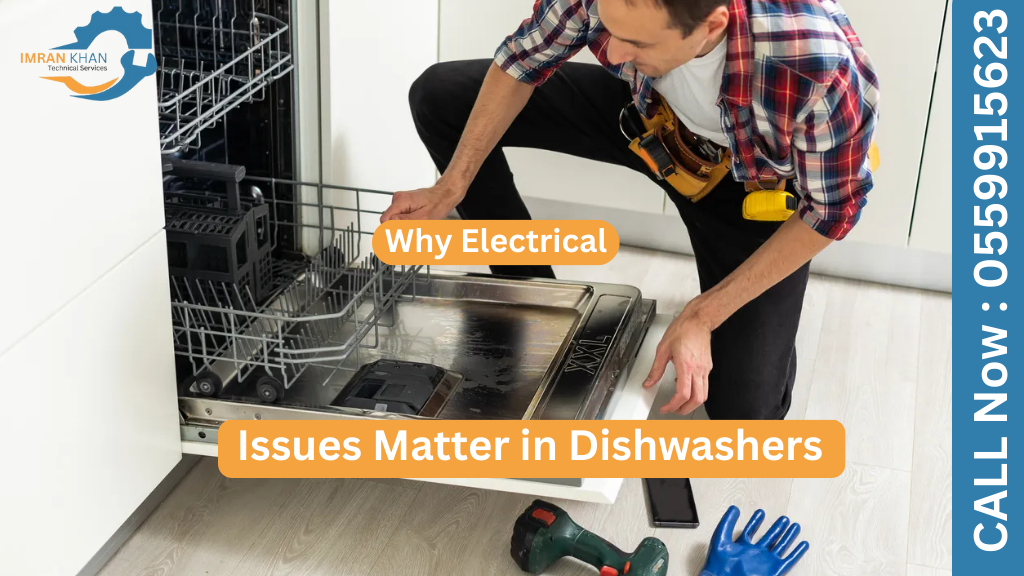
Why Electrical Issues Matter in Dishwashers
At their core, dishwashers are more than just water and soap—they’re sophisticated machines powered by electricity. Every cycle relies on electricity to:
- Heat the water
- Run the motor and pump.
- Operate sensors and timers.
- Power the control panel and display
When something electrical goes wrong, the entire process is disrupted. In contrast to mechanical failures, electrical issues can affect multiple parts at once, making them harder for the average person to diagnose.
Common Electrical Problems in Dishwashers
1. Power Supply Issues
Sometimes the problem isn’t in the dishwasher itself but in the power source. A loose plug, tripped circuit breaker, or faulty outlet can leave your dishwasher powerless.
For instance, one family in Arabian Ranches thought their dishwasher was broken after it repeatedly shut off mid-cycle. A quick inspection revealed their kitchen circuit was overloaded with multiple appliances, causing the breaker to trip. The fix was as simple as redistributing appliance use across outlets.
2. Blown Fuses and Burnt Wires
Inside the dishwasher, small fuses protect the machine from electrical surges. If one blows, the dishwasher may stop working entirely. Similarly, burnt or frayed wires can interrupt power flow and pose fire hazards.
Furthermore, kitchens in Dubai and other hot, humid regions may face faster wear on electrical wiring due to temperature and moisture exposure. This makes regular inspections even more critical.
3. Faulty Control Boards
Modern dishwashers rely heavily on electronic control boards—the “brain” of the appliance. If the board malfunctions, you might notice strange symptoms like:
- The dishwasher starts but stops randomly.
- Buttons or touch controls are not responding.
- Incorrect cycles running
A resident in Al Quoz once reported her dishwasher would turn on and drain but skip washing altogether. The technician traced the issue back to a damaged control board caused by a voltage fluctuation.
4. Heating Element Failures
The heating element in your dishwasher not only warms water for effective cleaning but also helps dry dishes afterward. Since it runs on electricity, a failure can cause lukewarm water or dishes that remain wet even after a full cycle.
As a result, users often mistake this issue as a detergent problem when in reality, it’s an electrical malfunction.
5. Short Circuits
Short circuits occur when an electrical current takes an unintended path, often leading to sparks, smoke, or even burnt smells. In dishwashers, short circuits may arise from water leaks reaching wires or from internal component damage.
For instance, a café in Al Barsha once had its dishwasher trip the entire kitchen’s power. On inspection, technicians found that a slow leak had corroded the wiring, causing a dangerous short circuit.
Warning Signs to Watch For
Electrical issues rarely happen without warning. Some tell-tale signs include:
- The dishwasher won’t turn on at all.
- Dimming kitchen lights when the dishwasher runs
- Burning smells or unusual heat near the machine
- Error codes flashing on the display
- Cycles that stop suddenly without finishing
If you notice any of these, it’s important not to ignore them. Unlike clogged filters or dirty spray arms, electrical problems can escalate quickly into costly or hazardous situations.
Why Electrical Issues Shouldn’t Be DIY’d
While many homeowners love a good DIY fix, electrical problems are a different story. Unlike cleaning a filter or unclogging a spray arm, electrical repairs require expertise and specialized tools.
Attempting a DIY repair can lead to:
- Risk of electrocution
- Further damage to the dishwasher
- Voiding your warranty
- Fire hazards if wires are mishandled
Instead, it’s safer and smarter to call a professional technician trained in appliance electrical systems.
Preventing Electrical Problems in Your Dishwasher
Prevention is always better than a cure. Here are some simple steps to reduce the risk of electrical trouble:
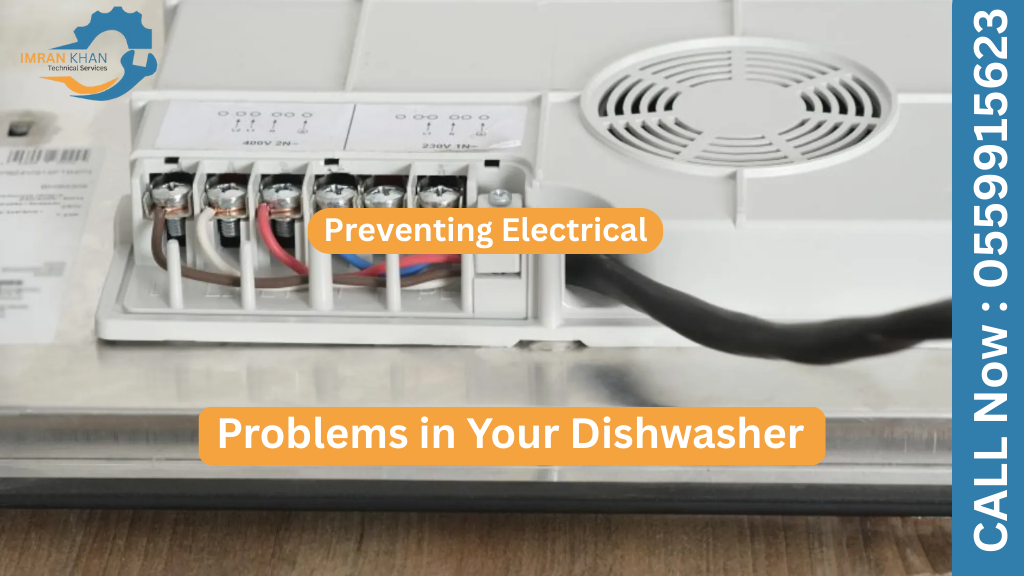
- Use a dedicated outlet. Avoid plugging your dishwasher into the same circuit as heavy appliances like microwaves or ovens.
- Install surge protection. This shields sensitive components like control boards from voltage spikes.
- Check for leaks. Regularly inspect the dishwasher for water leaks that could reach wiring.
- Schedule yearly maintenance. Professional servicing can catch minor electrical wear before it turns into a major issue.
- Keep the area ventilated. Heat and moisture around the machine can accelerate electrical wear.
For example, one household in Dubai Marina installed a simple surge protector after repeated voltage fluctuations damaged their electronics. Since then, their dishwasher and other appliances have worked without interruption.
A Story of Prevention: Saving Hundreds with Early Action
Consider the story of Kareem, who noticed his dishwasher occasionally made a faint burning smell during operation. Rather than ignoring it, he called a technician immediately. The inspection revealed a partially melted wire connection that could have caused a fire if left unchecked. The repair cost him just a fraction of what replacing the dishwasher—or worse, dealing with a kitchen fire—would have.
His experience underscores an important lesson: listening to the warning signs can save you money, time, and peace of mind.
The Bigger Picture: Electrical Health at Home
Dishwasher electrical problems often highlight a larger issue—household wiring health. Especially in fast-growing cities like Dubai, where many homes are equipped with modern appliances, ensuring your electrical systems can handle the load is crucial. Sometimes what looks like a dishwasher issue may actually point to outdated wiring or overloaded circuits in the home.
FAQ: Dishwasher Electrical Problems in Dubai
1. What are the common electrical issues in dishwashers?
Common problems include power supply issues, blown fuses or burnt wires, faulty control boards, heating element failures, and short circuits. These can cause the dishwasher to stop mid-cycle, not start, or show error codes.
2. What are the warning signs of an electrical problem?
Watch for the dishwasher not turning on, dimming lights when running, burning smells, unusual heat, flashing error codes, or cycles stopping suddenly.
3. Can I fix dishwasher electrical issues myself?
No. Electrical repairs are dangerous and require expertise. DIY attempts risk electrocution, further damage, voiding warranties, or even fire hazards. A trained technician should handle these problems.
4. How can I prevent electrical issues in my dishwasher?
Use a dedicated outlet, install surge protection, check for leaks, schedule yearly maintenance, and ensure proper ventilation around the appliance to reduce heat and moisture buildup.
5. Why is it important to address electrical problems promptly?
Ignoring warning signs can lead to appliance damage, costly repairs, or even fire hazards. Early professional intervention saves money, protects your dishwasher, and ensures home safety.
Closing Thoughts
Dishwashers have transformed kitchen life, giving families more time for what matters most. But when electrical issues strike, they can disrupt not only your daily routine but also your safety.
From blown fuses to faulty control boards, understanding the common electrical problems in dishwashers—and the warning signs that accompany them—puts you in a stronger position as a homeowner. More importantly, knowing when to call a professional can save you from dangerous DIY attempts and costly mistakes.
So, the next time your dishwasher stops mid-cycle or refuses to start, don’t just assume it’s a minor glitch. Pause, observe the signs, and ask yourself: Could this be an electrical issue? Acting quickly may not only save your dishwasher but also protect your home.
Latest Post:
-

Dishwasher Repair Services for Loud Noises: Causes, Fixes & When to Call Experts
A dishwasher should make a steady, low hum while running. If yours suddenly starts grinding, rattling, buzzing, or screeching, it’s a clear sign something isn’t right. Strange sounds are often the first warning that an internal component is loose, blocked, or wearing out. Ignoring the noise may lead to bigger and more expensive damage later.…
-
Fridge Repair Services in Dubai: How to Fix Frost Build-Up and Faulty Thermostats
Refrigerators play a vital role in every home and business in Dubai, where high temperatures make food preservation essential. When a fridge starts developing frost build-up or suffers from a faulty thermostat, it can quickly turn into a costly problem if ignored. These issues not only affect cooling performance but also increase electricity consumption and…
-
How AC Repair Services in Dubai Can Reduce High Electricity Consumption
Living in Dubai means relying heavily on air conditioning for most of the year. With extreme temperatures and long summers, AC systems often run for hours without a break. While this ensures comfort, it also leads to one major concern for residents and businesses alike — high electricity consumption. Many people are surprised when they…