Opening Hook
It was the middle of summer in Dubai when Aamir walked into his kitchen, craving a glass of chilled water after returning from a scorching afternoon outdoors. To his shock, the bottle he pulled from the fridge was lukewarm. He sighed with relief, though—“No worries, I just refilled the gas last week.” But hours later, the fridge was still as warm as the room. If you’ve ever been in Aamir’s shoes, you know the frustration: what do you do when your fridge doesn’t cool even after a gas refill?
This problem is more common than people think, and while a gas refill is often seen as the solution to cooling issues, it’s not always the whole story.
Why People Assume Gas Refill Solves Everything
Many homeowners believe that refrigerant gas—the fluid responsible for cooling—is the only reason behind poor fridge performance. So, when a fridge doesn’t cool, the quick-fix solution often suggested is “refill the gas.”

For instance, technicians are frequently called into homes in Dubai, Sharjah, and Abu Dhabi for gas refills. And yes, sometimes it works instantly. The fridge starts humming, and within hours, everything is cold again.
But here’s the truth: if the problem persists even after refilling the gas, the real issue likely lies elsewhere.
Possible Reasons Your Fridge Still Doesn’t Cool
1. Gas Leakage
One of the most common culprits is leakage. Imagine trying to fill a balloon with air that has a hole—it won’t stay inflated. Similarly, if your fridge has a leak in the coils or pipes, the newly refilled gas escapes, leaving your fridge powerless to cool.
For instance, Farah from Arabian Ranches discovered that her fridge stopped cooling just two days after a refill. A technician later revealed a pinhole leak in the copper tubing. Without sealing the leak, the gas would keep escaping no matter how many times it was refilled.
2. Compressor Problems
The compressor is often called the “heart” of a fridge. It circulates refrigerant and keeps the cooling cycle running. If it’s weak, faulty, or completely dead, the fridge won’t cool—regardless of how much gas is inside.
Furthermore, compressors can fail due to age, voltage fluctuations, or overuse in Dubai’s hot climate. Replacing a compressor is more costly than a gas refill, but it’s sometimes the only way to restore proper cooling.
3. Dirty Condenser Coils
In contrast to what many people think, sometimes the issue has nothing to do with gas or the compressor. Condenser coils, usually located at the back or bottom of the fridge, are responsible for releasing heat. If they’re covered in dust, dirt, or grease, they can’t function efficiently.
As a result, the fridge struggles to release heat, making the interior feel warmer than it should. A simple cleaning can sometimes bring a fridge back to life without any major repairs.
4. Faulty Thermostat or Sensors
Another overlooked issue is the thermostat. If it’s not detecting the right temperature, it won’t signal the compressor to turn on. Similarly, modern fridges rely on sensors to manage cooling cycles. If these fail, the fridge may run inconsistently—or not at all.
For example, Bilal in Dubai Marina had his fridge gas refilled twice in a month. The real issue? A broken thermostat that costs a fraction of the refill price.
5. Blocked Air Vents or Evaporator Fan Issues
Inside the fridge, cool air needs to circulate freely. Blocked air vents—caused by overstuffed shelves or ice buildup—can prevent even cooling. Likewise, if the evaporator fan motor fails, cold air from the freezer won’t reach the fridge compartment.
As a result, even with sufficient gas, the fridge will feel warm in some areas and cold in others.
The Risk of Repeated Gas Refills
Many households unknowingly fall into the cycle of repeated gas refills. At first, it seems cheaper—“just top it up.” But in the long run, constant refills without addressing the root cause can be costlier and harmful to the environment.
Furthermore, frequent gas loss points to underlying issues like leaks or compressor inefficiency, which require professional inspection. Ignoring these signs only leads to bigger breakdowns and higher repair costs.
How to Diagnose the Real Problem
So, what should you do when your fridge doesn’t cool even after a refill?
- Check for leaks – A technician can use a leak detector or soap solution to find escaping gas.
- Test the compressor – Listen for humming sounds or ask a professional to check its pressure.
- Clean condenser coils – A simple DIY step that can improve performance dramatically.
- Inspect the thermostat – Ensure it’s set correctly and functioning.
- Look for ice buildup or blocked vents – Clear away obstructions to improve airflow.
By following these steps—or having a reliable technician do so—you can avoid unnecessary expenses and restore your fridge’s cooling power.
Real-Life Story: From Frustration to Fix
Consider the story of Maya, a resident of Dubai Sports City. Her fridge stopped cooling during Ramadan, just before a big family gathering. After a gas refill, it seemed fine for a week—but then the problem returned.
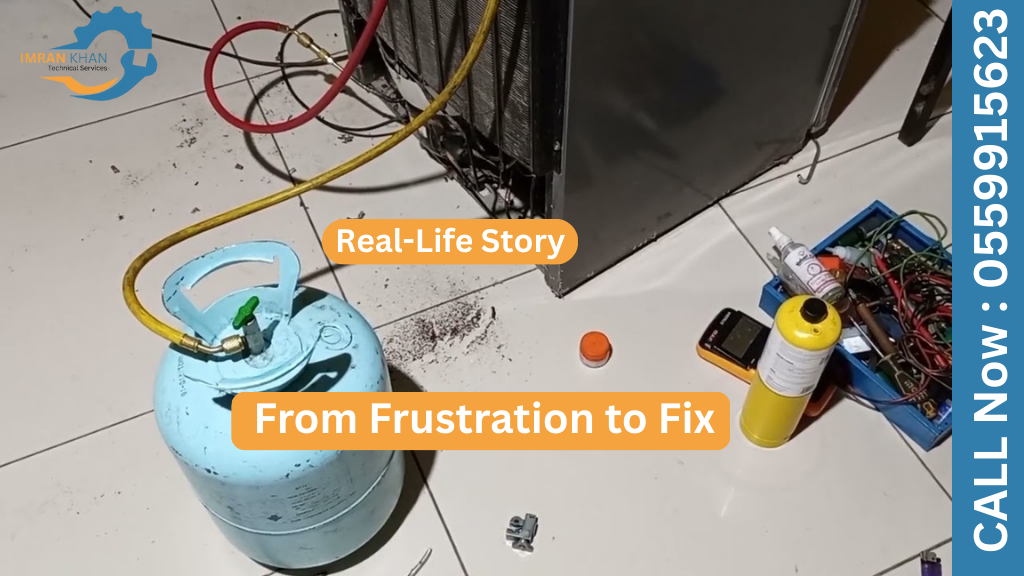
This time, she called an experienced technician who identified a leak in the evaporator coil. After sealing the leak and recharging the gas properly, her fridge worked perfectly. The lesson? A short-term fix isn’t enough if the root problem isn’t addressed.
Preventive Maintenance Tips
To avoid fridge breakdowns in the first place, here are some easy steps:
- Clean coils every 6 months to prevent overheating.
- Don’t overload the fridge, as it blocks air circulation.
- Check door seals regularly—loose gaskets waste cooling.
- Schedule annual maintenance with a professional technician.
In Dubai’s extreme climate, where appliances work overtime, preventive care can save you from last-minute headaches.
Frequently Asked Questions (FAQ)
1. Why is my fridge not cooling even after a gas refill?
A gas refill may not solve the issue if there is a gas leak, a faulty compressor, dirty condenser coils, or problems with the thermostat or sensors. These issues prevent proper cooling despite sufficient refrigerant.
2. How can I tell if my fridge has a gas leakage?
Common signs include the fridge cooling for a short time after a refill and then stopping again. A professional technician can confirm leakage using proper leak detection tools.
3. Can a faulty compressor cause cooling problems even with enough gas?
Yes. The compressor circulates the refrigerant. If it is weak or damaged, the cooling cycle won’t function, no matter how much gas is in the system.
4. Is it safe to keep refilling fridge gas repeatedly?
No. Repeated gas refills without fixing the root problem can be expensive, harmful to the environment, and may lead to major component failure over time.
5. What maintenance steps can help prevent fridge cooling problems?
Regularly clean condenser coils, avoid overloading the fridge, check door seals, ensure proper airflow, and schedule annual professional maintenance—especially important in hot climates like Dubai.
Closing Thoughts
When your fridge isn’t cooling even after a gas refill, it’s a clear sign that something deeper is wrong. From leaks and faulty compressors to dirty coils or sensor failures, the causes vary—but all require proper inspection.
The key takeaway? A gas refill alone isn’t always the answer. Treating it as a band-aid solution can lead to wasted money and repeated frustration. Instead, invest in professional, reliable repair services that diagnose and solve the root cause.
So, the next time your fridge lets you down, don’t panic. Think of Aamir, Maya, and countless others in Dubai who’ve been there too. With the right help, your fridge can return to being the quiet, dependable workhorse that keeps your home running smoothly.
Because at the end of the day, nothing feels better than reaching for a perfectly chilled drink on a hot summer afternoon—confident that your fridge is doing its job.
Latest Post:

Strange AC Noise Fix: Complete AC Sound Problem Solution Guide
Certified Experts Same Day Service 24/7 Emergency Support 5000+ Happy Customers Google Rated Business Strange AC Noise Fix: Complete AC Sound Problem Solution Guide Home Is your AC making strange noises? While some sounds are normal during operation, unusual noises such as buzzing, rattling, clicking, banging, or hissing can indicate underlying problems that need attention.…

Washing Machine Not Cleaning Clothes? Expert & Technician
Washing Machine Not Cleaning Clothes? Causes, Fixes & Expert Repair Guide Home Certified Experts Same Day Service 24/7 Emergency Support 5000+ Happy Customers Google Rated Business A washing machine is designed to make laundry easier, but when it stops cleaning clothes properly, it can quickly become frustrating. If your clothes come out with stains, detergent…

Dishwasher Not Finishing Wash Cycle? Complete Guide & Quick Fixes
Dishwasher Not Finishing Wash Cycle? Causes, Fixes & Repair Guide Home Certified Experts Same Day Service 24/7 Emergency Support 5000+ Happy Customers Google Rated Business A dishwasher that stops before completing its wash cycle can be frustrating and inconvenient. Instead of clean dishes, you’re left with dirty plates, standing water, or a machine that suddenly…