
Opening Hook
It was the hottest afternoon of the year in Dubai when Ali, a father of three, heard a sudden click followed by silence. The ceiling fan slowed to a stop, the AC unit went dead, and his kids groaned in unison. The culprit? The breaker had tripped—again. Frustrated, Ali reset the switch, only for the issue to recur ten minutes later. If you’ve ever experienced this, you know how stressful it feels: you’re caught between unbearable heat and a mysterious electrical issue. But why does your air conditioner keep tripping the breaker, and what can you do about it?
The Basics: What Does “Tripping the Breaker” Mean?
Before we dive into causes, let’s clarify the problem. A circuit breaker is your home’s safety guard. It cuts off electricity when it senses an overload or short circuit, preventing fires and serious damage.
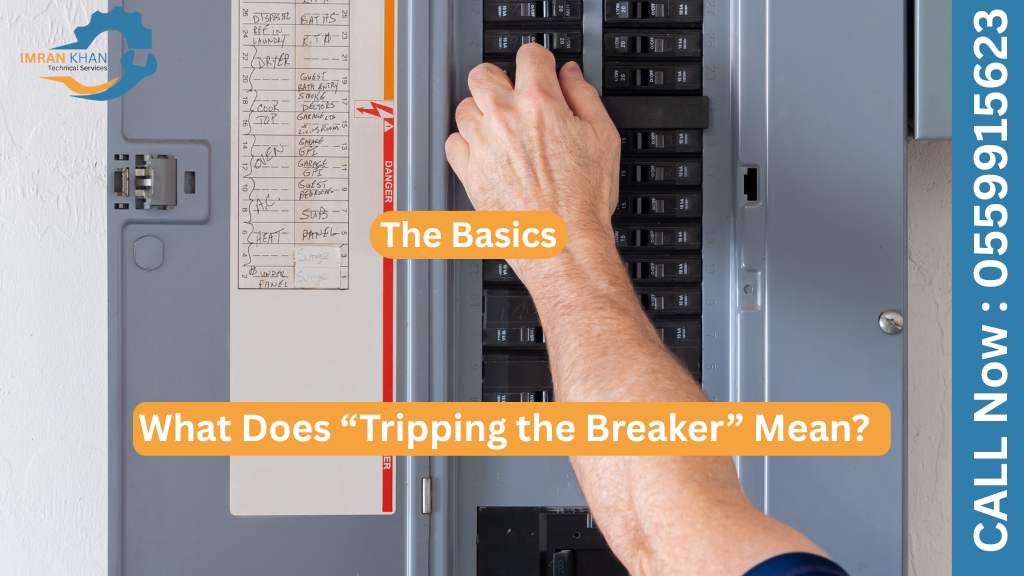
In simple terms, if your AC is demanding more electricity than the breaker can safely handle, the breaker shuts everything down. It’s inconvenient, yes, but it’s also protecting you.
For instance, one Dubai resident ignored repeated breaker trips and kept resetting it until smoke began seeping from his AC panel. Thankfully, no one was hurt, but it could have been disastrous. Understanding the why behind the trips is the key to solving the issue safely.
Reason #1: A Dirty Air Filter or Blocked Airflow
One of the most common—and often overlooked—causes is something as simple as a dirty air filter. When airflow is blocked, the AC’s motor has to work harder to push air through. That strain makes it draw more electricity, which can overload the circuit.
For example, a family in Jumeirah discovered their breaker trips disappeared after replacing their heavily clogged filter. What seemed like a complex electrical problem had a surprisingly simple fix.
Furthermore, blocked vents or closed registers can also trigger the same issue. Always check the airflow path before assuming there is a problem with wiring or machinery.
Reason #2: Refrigerant Issues
In contrast to clogged filters, refrigerant problems are less visible but equally troublesome. Low refrigerant levels cause the AC compressor to overheat as it struggles to cool your home. That overheating leads to higher electrical demands—and a tripped breaker.
For instance, a Sharjah homeowner reported repeated trips every afternoon. An HVAC technician later discovered a refrigerant leak. Once repaired, the AC ran smoothly without straining the breaker.
As a result, if breaker trips coincide with poor cooling performance, refrigerant issues might be the hidden culprit.
Reason #3: Dirty or Failing Coils
Your AC’s condenser coils (located in the outdoor unit) release the heat it pulls from indoors. When these coils are dirty or clogged with dust, sand, or debris—common in UAE climates—the system overheats. Overheating means the compressor pulls extra current, causing the breaker to trip.
In one case, an expat family in Abu Dhabi complained that their breaker tripped after every sandstorm. The solution? Regular coil cleaning. Once serviced, their system stopped shutting down.
This highlights an important point: desert environments demand more frequent maintenance than cooler, dust-free regions.
Reason #4: Overloaded Circuit
Sometimes, the problem isn’t with the AC itself but with the electrical setup. If other appliances—like washing machines or ovens—share the same circuit as your AC, the combined load may overwhelm the breaker.
For example, a bachelor apartment in Dubai Marina had both the AC and microwave wired into one circuit. Every time the tenant heated food while cooling the room, the breaker snapped. Rewiring to separate circuits solved the issue immediately.
Furthermore, older apartments may have outdated electrical panels that simply weren’t designed for modern high-energy appliances. Upgrading the breaker or panel may be necessary for long-term safety.
Reason #5: Faulty AC Components
In some cases, the AC unit itself is failing. Worn-out motors, shorted wiring, or a faulty compressor can all draw excessive current. Unlike dirty filters, these issues aren’t DIY fixes—they require a professional’s touch.
For instance, one villa owner in Dubai ignored breaker trips for months. Eventually, the compressor failed completely, leading to a replacement bill in the thousands. If a breaker keeps tripping even after basic checks, it’s a warning sign you shouldn’t ignore.
As a result, think of breaker trips as your AC sending out an SOS before something bigger fails.
Reason #6: Incorrectly Sized AC or Breaker
Believe it or not, sometimes the problem begins at installation. If your AC is too large for the electrical circuit—or if the breaker itself is undersized—it’s a mismatch destined for trips.
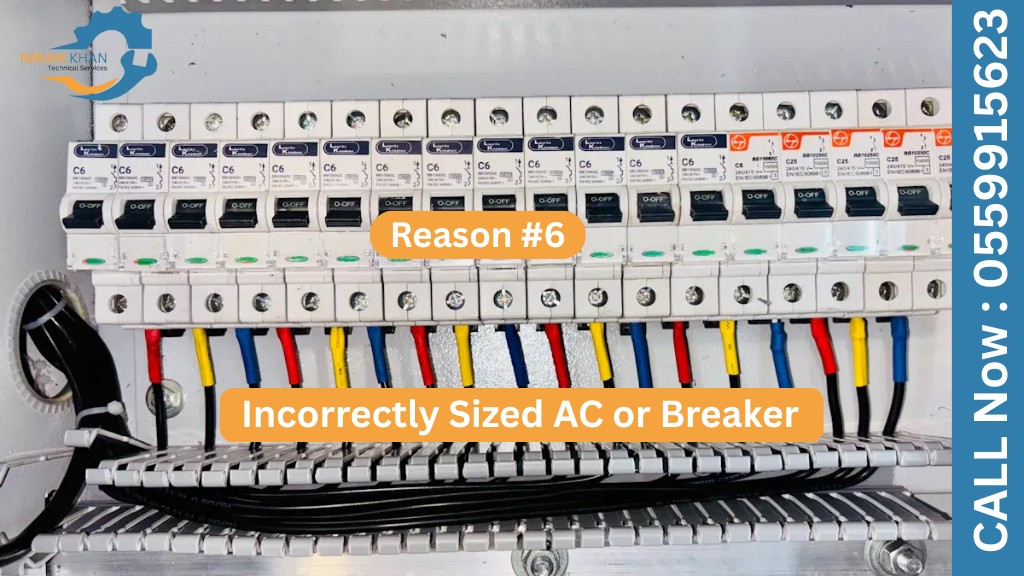
For example, a Dubai couple installed a powerful AC unit meant for commercial spaces in their villa, thinking bigger meant better cooling. Instead, the oversized unit kept overwhelming their breaker. Only after installing the correct breaker size did the problem stop.
Furthermore, this is why professional installation matters. An expert calculates load requirements, ensuring your breaker can handle the AC’s demand safely.
How to Troubleshoot Safely
When your AC trips the breaker, it’s tempting to just flip the switch back and carry on. But repeated resets without fixing the cause can damage both your AC and your home’s electrical system.
Here’s a safe approach:
- Check the basics – Replace dirty filters, open vents, and ensure no obstructions block airflow.
- Inspect the outdoor unit – Remove visible debris, leaves, or sand.
- Look at appliance use – Are multiple heavy devices running on the same circuit?
- Call a professional – If breaker trips persist, stop resetting and contact an HVAC technician or electrician.
For instance, homeowners who call early often spend far less on repairs than those who wait until components burn out.
Preventive Maintenance is Key
Much like a car, your AC needs regular check-ups. Scheduling annual or biannual servicing not only prevents breaker trips but also improves cooling efficiency and reduces electricity bills.
Furthermore, many UAE service companies now offer preventive maintenance contracts, which cover regular coil cleaning, refrigerant checks, and electrical inspections. Homeowners who sign up often avoid emergencies altogether.
For example, Ali, the father from our opening story, finally invested in a yearly maintenance plan. Since then, his AC hasn’t tripped once—even in peak summer heat.
Frequently Asked Questions (FAQ)
1. Why does my air conditioner keep tripping the circuit breaker?
An AC usually trips the breaker because it is drawing more electricity than the circuit can handle. Common reasons include dirty air filters, blocked airflow, refrigerant problems, overloaded circuits, or faulty internal components.
2. Can a dirty air filter really cause the breaker to trip?
Yes. A clogged air filter restricts airflow, forcing the AC motor and compressor to work harder. This increases power consumption and can overload the breaker, causing it to trip.
3. Is it safe to keep resetting the breaker when the AC trips?
No. Repeatedly resetting a tripping breaker without fixing the root cause can damage your AC, overheat wiring, and increase the risk of electrical fires. It’s best to identify and solve the issue first.
4. Could my home’s electrical system be the problem instead of the AC?
Yes. If your AC shares a circuit with other high-power appliances or if your electrical panel is outdated, the combined load may overload the breaker. In such cases, rewiring or upgrading the breaker may be necessary.
5. When should I call a professional technician for breaker trips?
If the breaker continues to trip after basic steps like cleaning filters, clearing airflow, and checking appliance usage, you should call an HVAC technician or electrician immediately to prevent further damage.
Closing Reflection
An AC that trips the breaker isn’t just an inconvenience—it’s a warning. From clogged filters and refrigerant leaks to overloaded circuits and faulty components, the causes vary, but the message is the same: something isn’t right.
The good news? Most issues can be solved with proper care, timely checks, and professional guidance. Instead of dreading the next click and blackout, homeowners can take control by treating their AC and electrical systems as essential investments in comfort and safety.
So the next time your breaker trips, don’t just reset it. Ask yourself: What’s my AC trying to tell me—and how soon can I fix it?
Latest Post:
-
Dishwasher Repair Services for Loud Noises: Causes, Fixes & When to Call Experts
A dishwasher should make a steady, low hum while running. If yours suddenly starts grinding, rattling, buzzing, or screeching, it’s a clear sign something isn’t right. Strange sounds are often the first warning that an internal component is loose, blocked, or wearing out. Ignoring the noise may lead to bigger and more expensive damage later.…
-
Fridge Repair Services in Dubai: How to Fix Frost Build-Up and Faulty Thermostats
Refrigerators play a vital role in every home and business in Dubai, where high temperatures make food preservation essential. When a fridge starts developing frost build-up or suffers from a faulty thermostat, it can quickly turn into a costly problem if ignored. These issues not only affect cooling performance but also increase electricity consumption and…
-
How AC Repair Services in Dubai Can Reduce High Electricity Consumption
Living in Dubai means relying heavily on air conditioning for most of the year. With extreme temperatures and long summers, AC systems often run for hours without a break. While this ensures comfort, it also leads to one major concern for residents and businesses alike — high electricity consumption. Many people are surprised when they…