Opening Hook
Sana had invited her friends over for dinner in Dubai. The meal went perfectly—until she opened the dishwasher afterward. Instead of sparkling plates, she was greeted with damp glasses, lukewarm plates, and utensils that looked only half clean. “What’s the point of having a dishwasher,” she sighed, “if it can’t even heat water properly or dry the dishes?”
Sound familiar? Many households encounter the frustrating issue of dishwashers not heating water enough or leaving dishes wet after a cycle. These aren’t just minor inconveniences—they’re signs that something in the machine isn’t working the way it should. Let’s explore why this happens, how to diagnose it, and what steps you can take to fix the problem.
Why Water Heating Matters in Dishwashers
The first thing to understand is that dishwashers rely on hot water not just for cleaning, but also for sanitizing.

Hot water breaks down grease, removes stubborn food particles, and helps detergent dissolve effectively. Without sufficient heat, you may notice streaks, residue, or lingering odors.
For instance, in one household in Arabian Ranches, a dishwasher consistently produced cloudy glasses. A technician later revealed the heating element had failed, meaning the water was barely lukewarm throughout the cycle. Once replaced, the dishwasher returned to producing spotless results.
Common Causes of Poor Water Heating
If your dishwasher isn’t heating water properly, several culprits could be responsible:
- Faulty Heating Element:
Much like the coil in an electric kettle, this part heats the water. If it burns out, the water never reaches the required temperature. - Malfunctioning Thermostat:
The thermostat monitors the water temperature. A faulty one may misread levels, causing cycles to run cold. - Blocked Filters or Spray Arms:
If water can’t circulate properly, even heated water won’t reach every corner of the machine. - Household Hot Water Supply Issues:
In some cases, the dishwasher depends on your home’s hot water line. If the supply itself is lukewarm, the dishwasher struggles to clean effectively.
As a result, identifying whether the problem lies inside the machine or outside it is the first step.
Why Drying Often Fails After a Wash
Even if the washing part works fine, you may find dishes still dripping wet at the end. This is another common frustration.
Dishwashers use several methods for drying:
- Heat Drying: Uses the heating element to warm the dishes.
- Condensation Drying: Relies on a hot water rinse followed by natural evaporation.
- Fan-Assisted Drying: Circulates warm air for faster results.
When drying fails, it usually comes down to one of these issues:
- Broken heating element (same as with water heating).
- Faulty rinse aid dispenser (rinse aid helps water slide off dishes).
- Overloaded racks that prevent airflow.
- Plastic items, which simply don’t retain heat as well as glass or ceramic.
For example, Ahmed in Al Barsha noticed his plastic lunch boxes were always dripping wet, while plates dried perfectly. The technician explained that plastic doesn’t hold heat, so in dishwashers without fan drying, plastics often remain wet.
The Link Between Heating and Drying Issues
Interestingly, both problems—poor water heating and poor drying—often point to the same faulty part: the heating element.
If your dishwasher’s heating element fails, it can’t heat water during the wash cycle or generate enough warmth during drying. That’s why many homeowners notice these issues together.
Furthermore, if the thermostat malfunctions, it may prevent the heating element from switching on at all. In short, one small failure can create two big frustrations.
How to Troubleshoot at Home
Before calling a technician, there are a few simple checks you can try:
- Check Your Hot Water Supply:
Run your kitchen faucet until the water is hot, then start the dishwasher. This ensures the machine begins with the hottest possible water. - Use Rinse Aid:
A rinse aid dramatically improves drying by preventing water droplets from clinging to dishes. - Avoid Overloading:
When racks are crammed, hot air or water can’t circulate effectively, leaving some dishes dirty or wet. - Inspect Settings:
Some eco-friendly or quick-wash modes use lower temperatures and skip heated drying. Switching to a “heavy” or “sanitize” setting may solve the problem. - Check the Filter and Spray Arms:
Food debris can block water flow. A simple cleaning might restore performance.
When to Call a Professional
Of course, some problems require expert attention. If your dishwasher consistently produces cold water or fails to dry dishes even after troubleshooting, it’s time to call in a technician.
Professionals can:
- Test the heating element for continuity.
- Replace a faulty thermostat.
- Repair control panel issues that prevent proper heating cycles.
For instance, a family in Dubai Marina kept struggling with wet dishes despite trying every home fix. A technician discovered the wiring connection to the heating element had burned out. Once repaired, the dishwasher returned to working like new.
Preventing Future Heating and Drying Issues
Prevention is always better than repair. Here are a few habits to keep your dishwasher running efficiently:
- Run hot water before each cycle: This primes the dishwasher with heat.
- Clean filters monthly: Prevents blockages that reduce performance.
- Use quality detergent and rinse aid: Cheap alternatives often don’t dissolve properly in cooler water.
- Schedule annual servicing: A professional checkup ensures heating elements, thermostats, and seals remain in good condition.
As a result, you’ll extend the lifespan of your appliance and avoid recurring frustrations.
The Bigger Picture: Why Dishwashers Struggle in the UAE
It’s worth noting that dishwashers in the UAE sometimes face additional challenges. Hard water, common in Dubai, leaves mineral deposits that reduce heating efficiency. Furthermore, high humidity can make drying less effective.
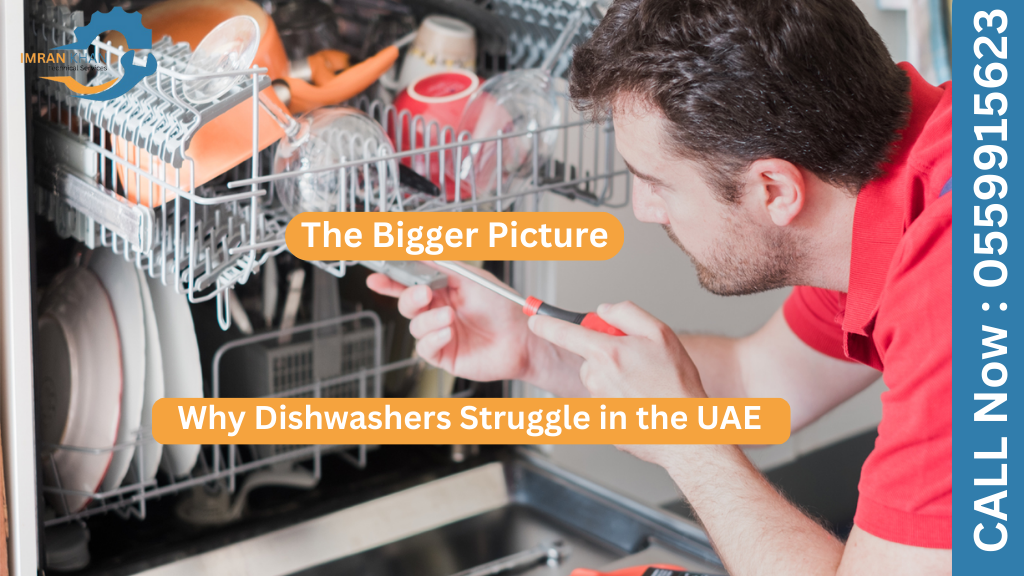
That’s why many technicians recommend installing a water softener or using special dishwasher salt, which improves heating efficiency and keeps dishes spot-free.
Frequently Asked Questions (FAQ)
1. Why is my dishwasher not heating water properly?
This usually happens due to a faulty heating element, malfunctioning thermostat, blocked filters or spray arms, or issues with the household hot water supply.
2. Why are my dishes still wet after the dishwasher cycle ends?
Poor drying is often caused by a broken heating element, lack of rinse aid, overloading, or the use of plastic items that do not retain heat well.
3. Can heating and drying problems be linked together?
Yes. Both issues are commonly connected to a failed heating element or thermostat, as these components control water temperature and drying heat.
4. What can I check at home before calling a technician?
You can run hot water before starting the cycle, use rinse aid, avoid overloading, clean the filter and spray arms, and ensure you’re not using an eco or low-temperature setting.
5. When should I call a professional for dishwasher heating or drying issues?
If the dishwasher consistently uses cold water, shows poor cleaning results, or fails to dry dishes even after basic troubleshooting, a professional technician is needed to diagnose and repair internal components.
Closing Thoughts
Sana’s dishwasher story has a happy ending. After calling a reliable technician, the heating element was replaced, and her machine was back to producing spotless, dry dishes. She learned that while dishwashers make life convenient, they also need occasional care to keep working at their best.
The takeaway? If your dishwasher isn’t heating or drying properly, don’t ignore it. It’s often a sign of a small problem that, if fixed early, can save you from bigger headaches later.
So, the next time you open your dishwasher and find wet or poorly cleaned dishes, remember: it’s not a failure of the machine’s promise, just a call for a little attention. With the right troubleshooting—and, when needed, professional help—your dishwasher can return to being the silent kitchen hero it was designed to be.
Latest Post:
24/7 Emergency Electrician Dubai — Fast Response Guaranteed
24/7 Emergency Electrician Dubai — Fast Response Guaranteed Home Certified Experts Same Day Service 24/7 Emergency Support 5000+ Happy Customers Google Rated Business Electrical emergencies can happen at any time, and delaying repairs can put your family, employees, and property at risk. Whether you’re experiencing a complete power outage, exposed live wires, burning smells, or…
Electrical Repair Services Dubai — Complete Guide 2026
Certified Experts Same Day Service 24/7 Emergency Support 5000+ Happy Customers Google Rated Business Electrical Repair Services Dubai — Complete Guide 2026 Home Electrical issues can happen without warning and should never be ignored. Whether you’re dealing with a power outage, faulty wiring, flickering lights, or a tripping circuit breaker, professional help is essential to…

Strange AC Noise Fix: Complete AC Sound Problem Solution Guide
Certified Experts Same Day Service 24/7 Emergency Support 5000+ Happy Customers Google Rated Business Strange AC Noise Fix: Complete AC Sound Problem Solution Guide Home Is your AC making strange noises? While some sounds are normal during operation, unusual noises such as buzzing, rattling, clicking, banging, or hissing can indicate underlying problems that need attention.…