Opening Hook
On a hot summer afternoon in Dubai, Omar opened his fridge to grab a cold bottle of water—only to find the milk curdled, vegetables wilted, and ice cream melting into a puddle. His fridge had stopped cooling overnight. The question racing through his mind was one every homeowner has faced at some point: Should I repair this fridge, or is it finally time for a replacement?
It’s a dilemma many families encounter. Refrigerators are among the most essential appliances in our homes, but like all machines, they don’t last forever. Knowing how long a fridge should last before repairs are needed can save you money, stress, and even prevent food wastage.
The Average Lifespan of a Fridge
Most refrigerators today last between 10 to 15 years on average, depending on the brand, model, and how well they are maintained. Premium models from brands like Samsung, Bosch, or LG often last longer if serviced properly.

Furthermore, the lifespan also depends on how heavily the fridge is used. For instance, a large family of six using the fridge constantly for drinks, snacks, and leftovers will put more strain on the appliance than a bachelor living alone.
In contrast, older models from decades ago often ran for 20 years or more, but they were less energy-efficient. Modern fridges are designed with advanced features like digital thermostats, ice makers, and smart technology—but these also mean more parts that can potentially fail.
When Repairs Are Needed Sooner Than Expected
Sometimes, fridges don’t even make it to their expected lifespan before showing signs of trouble. But this doesn’t always mean they’re “done for.”
For example, Nadia, a resident in Downtown Dubai, noticed her brand-new fridge wasn’t cooling properly after just three years. A quick visit from a technician revealed a blocked condenser coil—an easy fix that cost her far less than replacing the unit.
As a result, it’s important not to panic when your fridge misbehaves. Often, the issue is minor and repairable.
Common Signs Your Fridge Needs Repair
Knowing the warning signs early can prevent bigger, costlier problems. Look out for:
- Inconsistent Cooling – Food spoils faster, or the freezer isn’t freezing.
- Strange Noises – Clicking, buzzing, or rattling usually means a failing motor or compressor.
- Water Leaks – Puddles around the fridge often signal clogged defrost drains or faulty seals.
- Frost Buildup – Too much ice in the freezer points to a defrost system issue.
- High Electricity Bills – A struggling fridge consumes extra energy.
For instance, Ahmed thought his fridge was beyond saving because of loud humming noises. But after a service technician replaced a worn-out fan, the fridge ran smoothly again—and at half the cost of buying new.
Repair vs. Replace: The 50% Rule
A useful guideline homeowners often rely on is the 50% rule:
- If the repair costs less than 50% of the price of a new fridge, and the appliance is under 8 years old, repair is usually worth it.
- If the repair costs more than 50% of the replacement value, or the fridge is older than 10 years, replacement may be smarter.
Furthermore, repairing makes sense when the issue is small—like a faulty thermostat or blocked drain. But if the compressor fails (the heart of the fridge), replacement often becomes the more economical choice.
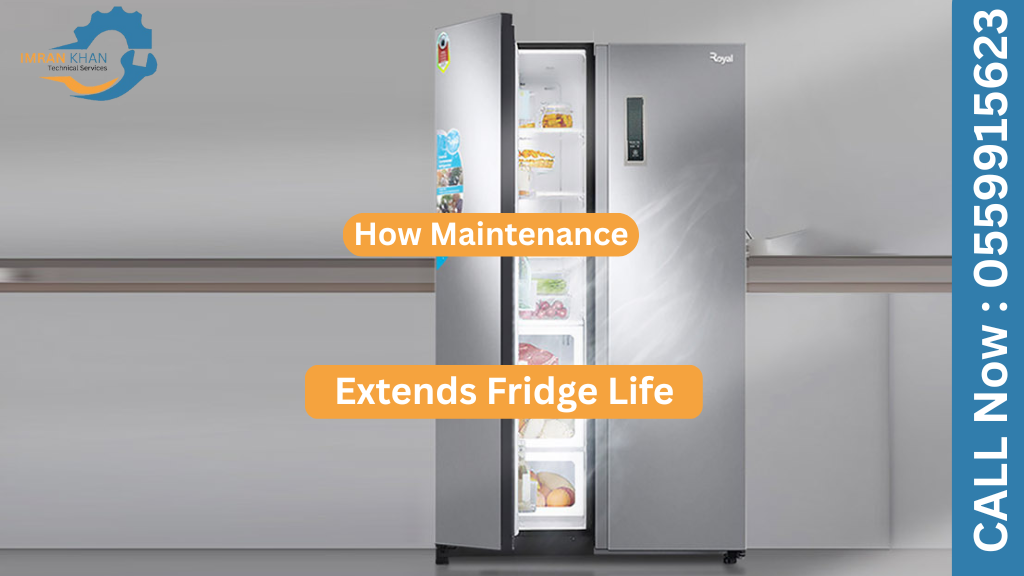
How Maintenance Extends Fridge Life
Just like cars, fridges need regular care to avoid premature breakdowns. Small habits can make a big difference in how long your fridge lasts before repair is needed.
- Clean the Coils: Dusty coils make the compressor work harder, shortening its life.
- Check the Door Seals: A loose seal lets cold air escape, wasting energy.
- Set the Right Temperature: 37°F (3°C) for the fridge and 0°F (-18°C) for the freezer is ideal.
- Avoid Overloading: Too much food blocks air circulation.
- Defrost When Needed: Prevents ice buildup that stresses the motor.
For instance, Leila, a mother of three, used to call technicians every year for fridge issues. Once she learned to clean her condenser coils every few months, her fridge’s performance improved dramatically, and she went two years without a single repair call.
The Role of Environment
Where you live also affects how long your fridge lasts. In hot climates like Dubai, fridges have to work harder to stay cool, which can shorten their lifespan if not maintained.
In contrast, a fridge in a cooler environment with moderate use might run smoothly for over a decade without major issues.
Furthermore, power fluctuations (common in some areas) can damage delicate components, making surge protectors a wise investment for long-term fridge health.
Stories from Real Households
Sometimes, hearing real experiences helps make the decision clearer.
- Fatima in Jumeirah: Her 12-year-old fridge stopped cooling. A technician quoted her nearly half the price of a new model to fix the compressor. She chose replacement—and her new fridge cut her electricity bill by 20%.
- Ali in Downtown Dubai: His 6-year-old fridge had a faulty thermostat. The repair took 30 minutes and cost less than a dinner outing. The fridge is still running strong two years later.
- Rashid in Marina: A small water leak made him think his fridge was “finished.” But it turned out to be a clogged defrost drain—fixed in under an hour.
These stories highlight the importance of professional advice before making a hasty decision.
Energy Efficiency: A Hidden Factor
Another reason people choose to replace instead of repair is energy efficiency.
Newer fridges use significantly less electricity than older models. If your fridge is more than 12 years old, even if it’s repairable, the extra money you pay on monthly bills may outweigh the savings from avoiding replacement.
As a result, sometimes investing in a new fridge is both eco-friendly and cost-effective in the long run.
So, How Long Should a Fridge Last Before Repair?
The simple answer: Most fridges need their first minor repair within 3–8 years, but with regular maintenance, they can last 10–15 years before major repairs or replacement become necessary.
Of course, the exact timing depends on the model, brand, usage, and environment. What matters most is being proactive—watching for early signs of trouble, scheduling regular maintenance, and consulting professionals before deciding whether to repair or replace.
Frequently Asked Questions (FAQ)
1. How long does a refrigerator usually last before needing repair?
Most refrigerators last between 10 to 15 years. Minor repairs may be needed within the first 3–8 years, depending on usage, maintenance, and environmental conditions.
2. What are the common signs that a fridge needs repair?
Common warning signs include inconsistent cooling, unusual noises, water leaks, excessive frost buildup, and a sudden increase in electricity bills.
3. Is it better to repair or replace a refrigerator?
If the fridge is under 8 years old and the repair cost is less than 50% of the price of a new fridge, repair is usually the better option. Older fridges with major issues may be better replaced.
4. Can regular maintenance extend the life of a refrigerator?
Yes. Cleaning condenser coils, checking door seals, setting correct temperatures, and avoiding overloading can significantly extend a fridge’s lifespan and reduce repair needs.
5. Does Dubai’s hot climate affect refrigerator lifespan?
Yes. High temperatures make refrigerators work harder, which can lead to faster wear if maintenance is neglected. Regular servicing is especially important in hot climates like Dubai.
Closing: The Smart Way Forward
Back to Omar’s story—after calling a technician, he learned his fridge only needed a simple thermostat adjustment. What could have been a costly replacement turned into a quick, affordable repair.
That’s the lesson for all of us: refrigerators don’t come with an expiration date stamped on the door, but they do give us clues about their health. Paying attention, acting quickly, and seeking expert help can save money and headaches.
Final Thought: A fridge isn’t just another appliance—it’s the silent guardian of your family’s food and comfort. Treat it well, and it will serve you faithfully for over a decade. When trouble strikes, don’t rush to replace it. First, ask yourself: Is this a quick repair or time for an upgrade? The answer could save you thousands.
Latest Post:

Strange AC Noise Fix: Complete AC Sound Problem Solution Guide
Certified Experts Same Day Service 24/7 Emergency Support 5000+ Happy Customers Google Rated Business Strange AC Noise Fix: Complete AC Sound Problem Solution Guide Home Is your AC making strange noises? While some sounds are normal during operation, unusual noises such as buzzing, rattling, clicking, banging, or hissing can indicate underlying problems that need attention.…

Washing Machine Not Cleaning Clothes? Expert & Technician
Washing Machine Not Cleaning Clothes? Causes, Fixes & Expert Repair Guide Home Certified Experts Same Day Service 24/7 Emergency Support 5000+ Happy Customers Google Rated Business A washing machine is designed to make laundry easier, but when it stops cleaning clothes properly, it can quickly become frustrating. If your clothes come out with stains, detergent…

Dishwasher Not Finishing Wash Cycle? Complete Guide & Quick Fixes
Dishwasher Not Finishing Wash Cycle? Causes, Fixes & Repair Guide Home Certified Experts Same Day Service 24/7 Emergency Support 5000+ Happy Customers Google Rated Business A dishwasher that stops before completing its wash cycle can be frustrating and inconvenient. Instead of clean dishes, you’re left with dirty plates, standing water, or a machine that suddenly…